
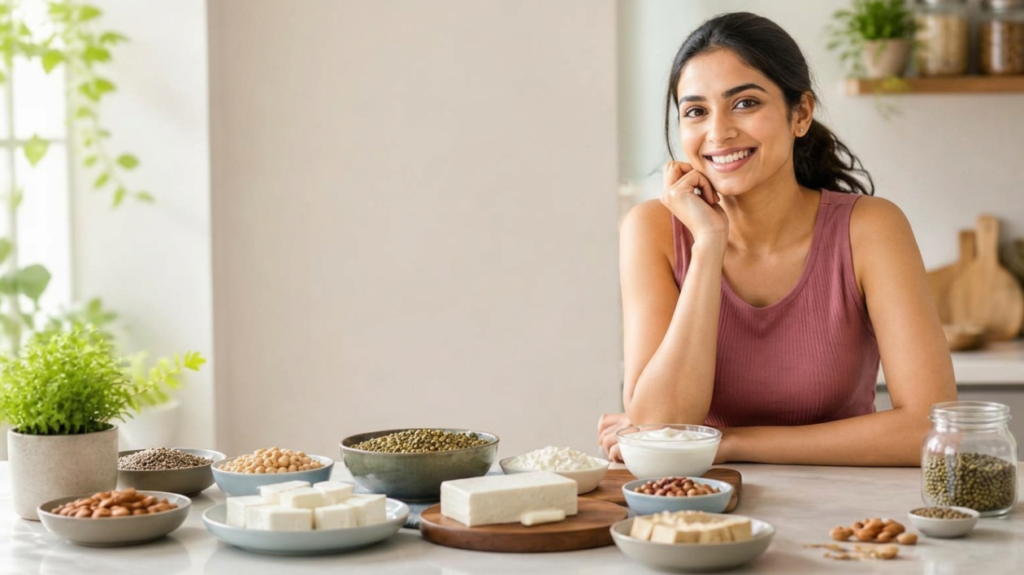
Daily protein intake is essential for women’s health, supporting muscle strength, metabolism, energy, immunity, and overall well-being. This guide explains how much protein Indian women need based on age and activity level, highlights the best vegetarian and non-vegetarian protein sources, and shares simple tips to meet daily protein goals through a balanced diet.
Protein is often associated with bodybuilders and athletes, but the truth is that every Indian woman needs adequate protein every day.
From supporting muscle strength and healthy bones to maintaining immunity, hormones, and hair health, protein plays a vital role throughout life.
Unfortunately, most preferred or consumed Indian diets are rich in carbohydrates but relatively low in protein.
Staples like rice, roti, and potatoes provide energy, but without enough dals, dairy, soy, or other protein-rich foods, women may struggle to meet their daily requirements.
According to the Indian Council of Medical Research (ICMR)–National Institute of Nutrition (NIN), healthy adults should consume 0.83 grams of protein per kilogram of body weight per day.
However, this recommendation is intended to meet the basic nutritional needs of healthy individuals. Women who exercise regularly, are trying to lose weight, or are over 50 years of age often require more protein to support muscle health and recovery.
Let’s explore how much protein Indian women need at different stages of life and how to meet those requirements using everyday Indian foods.
Why Is Protein Important for Indian Women?
Protein is made up of 20 amino acids, which are the building blocks of every cell in the body. Out of 20, 9 amino acids are essential amino acids (EAA).
It helps repair tissues, maintain muscles, produce enzymes and hormones, and support a healthy immune system.
Adequate protein intake may help:
- Preserve muscle mass
- Improve strength and recovery after exercise
- Keep you full for longer, supporting weight management
- Support healthy hair, skin, and nails
- Maintain bone health
- Strengthen immunity
- Promote healthy ageing
For women in India following vegetarian diets, consuming a variety of protein-rich foods is especially important to ensure adequate intake of essential amino acids.
We acknowledge that food preferences of Indian women have changed a lot over the last few decades, however, we have kept our focus on vegetarian food primarily.

Daily Protein Requirements by Lifestyle
The amount of protein you need depends not only on your body weight but also on your activity level.
| Lifestyle | Protein Requirement |
| Sedentary | 0.83 g/kg |
| Lightly Active | 1.0–1.2 g/kg |
| Weight Loss | 1.2–1.6 g/kg |
| Strength Training | 1.4–1.8 g/kg |
Example
For a 60 kg Indian woman:
| Goal | Daily Protein |
| General health | 50 g |
| Active lifestyle | 60–72 g |
| Weight loss | 72–96 g |
| Muscle building | 84–108 g |
Quick Tip: Spread your protein intake across all meals instead of consuming most of it at dinner. Research suggests that distributing protein throughout the day supports muscle protein synthesis more effectively.
Protein Needs by Age
We are conscioulsy not including girls below the age of 18 for a specific reason that by that age food choices are generally what is available at home.
Also, the protein requirements of girls below 18 years of age should meet from the regular home food in most cases, considering they are students.
We are following this segregation to eradicate the deviation based on various factors, which would dilute the core of this discussion.
18–30 Years
This is the phase when women are building careers, completing education, or starting families. Busy schedules often lead to skipped meals or reliance on processed foods.
Protein helps support:
- Lean muscle mass
- Healthy metabolism
- Hormonal balance
- Energy levels
- Exercise recovery
Aim for at least the recommended intake and increase it if you exercise regularly.
31–50 Years
As metabolism gradually slows, maintaining muscle becomes increasingly important. Women in this age group also face greater work and family responsibilities, making convenient, protein-rich meals a smart choice.
Higher protein intake may help:
- Reduce hunger
- Support healthy body composition
- Preserve lean muscle
- Improve recovery from exercise
Women Over 50
Age-related muscle loss (sarcopenia) becomes more common after 50. Consuming adequate protein alongside resistance exercises can help maintain strength, mobility, and independence.
Many experts recommend a protein intake of around 1.2 g/kg/day or higher for healthy older adults, depending on activity level and overall health.
Why Many Indian Women Don’t Get Enough Protein
Despite eating enough calories, many vegetarian Indian women may fall short on protein because:
- Meals are often dominated by rice or wheat.
- Breakfasts may consist mainly of tea and biscuits or low-protein foods.
- Busy lifestyles lead to skipped meals.
- Weight-loss diets sometimes eliminate nutritious foods without replacing the protein.
- There is a common misconception that only athletes need protein.
- Bad eating practices due to negligence of their own health.
Making small dietary changes—such as adding a bowl of dal, paneer, curd, or roasted chana—can significantly improve daily protein intake.
Personal Experience
I would share a personal experience here. My aunts in my village would have their first food in the day around 11 am and they have tea with chapatis on most days.
Then would have lunch around 3 pm. In evening, they would have another round of tea with some fried snacks (like fritters or puffed rice), and then a late-night dinner around 11 pm.
Some of us have tried to ask them to change this eating habit, but they would always deny, and say, they are used to it, and can’t change it now.
So, my sister-in-law’s also have developed the same eating habits.
According to them, they can’t eat before all the males of family haven’t eaten their food. With all sincerity, I wouldn’t ever mind if they eat before any of us.
Best Vegetarian Protein Sources for Indian Women
| Food | Protein (Approx.) |
| Soy chunks (50 g dry) | 25 gms |
| Paneer (100 g) | 18–20 gms |
| Greek yogurt (200 g) | 18–20 gms |
| Rajma (1 cup cooked) | 15 gms |
| Chana (1 cup cooked) | 15 gms |
| Moong dal (1 cup cooked) | 14 gms |
| Tofu (100 g) | 8–10 gms |
| Milk (250 ml) | 8 gms |
| Peanuts (30 g) | 7 gms |
| Almonds (30 g) | 6 gms |
Pro Tip: Pair cereals and pulses, such as rice with dal or roti with chana, to improve the overall quality of dietary protein.
Sample High-Protein Indian Meal Plan
Breakfast
Moong dal chilla with paneer stuffing and curd
Protein: ~25 g
Mid-Morning Snack
Roasted chana and buttermilk
Protein: ~10 g
Lunch
Brown rice, dal, paneer curry, and mixed vegetables
Protein: ~25 g
Evening Snack
Greek yogurt with roasted peanuts
Protein: ~18 g
Dinner
Whole wheat rotis with tofu or rajma curry
Protein: ~22 g
Total Protein: Approximately 100 grams
Adjust portion sizes to match your individual protein target.
Signs You May Not Be Getting Enough Protein
Low protein intake over time may contribute to:
- Feeling hungry soon after meals
- Muscle weakness
- Slow recovery after exercise
- Hair thinning or excessive hair fall
- Brittle nails
- Persistent fatigue
- Frequent illness due to reduced immune function
These symptoms can have multiple causes, so consult a healthcare professional if they persist.
Can Indian Women Meet Their Protein Needs Without Supplements?
Yes. Most healthy women in India can meet their protein requirements through a balanced diet that includes:
- Dal
- Paneer
- Tofu
- Soy products
- Milk
- Curd
- Lentils
- Chickpeas
- Kidney beans
- Nuts and seeds
Protein supplements, such as whey protein, can be convenient for women who struggle to meet their needs through food alone, but they are not essential for everyone.
Frequently Asked Questions
How much protein does a 60 kg Indian woman need?
A healthy sedentary woman weighing 60 kg needs about 50 grams of protein daily (0.83 g/kg). Active women or those with fitness goals may require more.
Is dal enough to meet daily protein needs?
Dal is an excellent source of plant protein, but relying on it alone may not provide enough protein. Combine it with paneer, dairy, soy foods, legumes, nuts, and seeds for a balanced intake.
Can protein help with weight loss?
Yes. Protein promotes fullness, helps preserve muscle during calorie restriction, and supports recovery from exercise, making it a valuable part of a weight-loss plan.
Is whey protein safe for Indian women?
For most healthy adults, whey protein can be a convenient way to increase protein intake. However, it should complement—not replace—a balanced diet. Women with kidney disease or other medical conditions should consult their doctor before using protein supplements.
Final Thoughts
Protein is a cornerstone of good health for women in India at every stage of life. While the ICMR recommends 0.83 grams of protein per kilogram of body weight for healthy adults, individual needs vary depending on age, activity level, and health goals.
The good news is that meeting your protein requirements doesn’t require expensive supplements or complicated meal plans. By including protein-rich Indian foods like dal, paneer, tofu, soy chunks, curd, milk, chickpeas, and nuts in your daily meals, you can support muscle health, maintain energy, and promote healthy ageing.
Small, consistent dietary improvements can make a significant difference to your long-term health.

A former Army serviceman, I learned the value of discipline, resilience, and perseverance—qualities that continue to guide my life. My fitness journey sparked a passion for strength, mobility, nutrition, and overall wellness. Through my writing, I share practical, evidence-based fitness tips and workout guides to help readers lead healthier lives. Beyond fitness, I enjoy traveling and exploring new places, believing that both fitness and travel inspire confidence, growth, and lifelong adventure.
Pingback: Protein-Packed Indian Breakfasts to Keep You Full Longer
Pingback: 15 Simple Morning Habits That Help You Lose Weight Naturally