
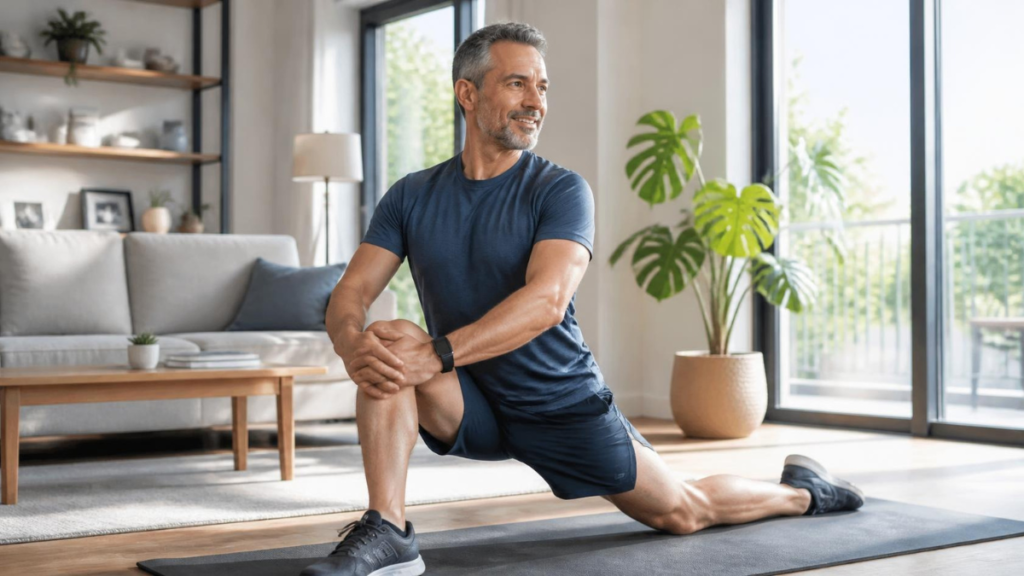
Have you noticed it’s harder to bend down, climb stairs, or get out of bed without feeling stiff?
Additionally, you’re not alone.
Many people begin to experience reduced flexibility and joint mobility after the age of 40.
The good news is that stiffness isn’t simply a sign of aging.
It can also be the result of spending long hours sitting, reduced physical activity, and a lack of regular movement.
Incorporating mobility exercises for people over 40 can help improve stiffness and flexibility.
The right mobility exercises can help loosen tight muscles, improve joint function, reduce aches, and make everyday movements feel easier. Best of all, you don’t need expensive equipment or a gym membership. Just 10–15 minutes a day can make a meaningful difference over time.
What Is Mobility and Why Does It Matter?
Mobility exercises for people over 40 help your body move a joint through its full range of motion with control. Additionally, mobility involves joints, muscles, tendons, ligaments, and the nervous system working together efficiently.
Good mobility helps you:
- Move more comfortably during daily activities
- Improve posture and balance
- Reduce the risk of falls and injuries
- Ease joint stiffness and muscle tightness
- Perform better during workouts
- Maintain independence as you age
Therefore, mobility supports daily tasks in everyday life.
Whether you’re lifting groceries, gardening, walking, or playing with your children or grandchildren, mobility remains essential.

Why Does Stiffness Increase After 40?
Several factors contribute to reduced mobility as we get older:
- Long hours of sitting at a desk
- Loss of muscle mass with age
- Reduced physical activity
- Poor posture
- Previous injuries
- Tight hips, shoulders, and ankles
While aging naturally affects the body, regular movement can slow these changes and help maintain healthy joints.
7 Mobility Exercises to Help You Move Freely Again
1. Cat-Cow Stretch
This gentle spinal movement improves flexibility and relieves stiffness in the back and neck.
How to do it:
- Start on your hands and knees.
- Inhale as you arch your back and lift your head.
- Exhale as you round your spine and tuck your chin.
- Repeat for 8–10 slow repetitions.
Benefits:
- Improves spinal mobility
- Reduces back stiffness
- Encourages better posture
2. World’s Greatest Stretch
Despite its bold name, this exercise truly works multiple areas of the body at once.
How to do it:
- Step into a deep lunge.
- Place both hands on the floor.
- Rotate your upper body and reach one arm toward the ceiling.
- Repeat on both sides.
Benefits:
- Opens the hips
- Improves thoracic spine mobility
- Stretches the hamstrings and hip flexors
3. Hip Circles
Healthy hips are essential for walking, climbing stairs, and maintaining balance.
How to do it:
- Stand on one leg while holding a chair for support if needed.
- Slowly move the opposite knee in a circular motion.
- Perform 10 circles in each direction before switching legs.
Benefits:
- Improves hip mobility
- Enhances balance
- Reduces stiffness
4. Shoulder Rolls
This simple exercise is especially useful if you spend long hours working on a computer.
How to do it:
- Roll your shoulders forward 10 times.
- Reverse and roll backward 10 times.
Benefits:
- Relieves neck and shoulder tension
- Improves posture
- Increases upper-body mobility
5. Deep Squat Hold
A supported deep squat helps improve ankle, hip, and knee mobility.
How to do it:
- Hold onto a sturdy support if necessary.
- Lower into a comfortable squat.
- Hold for 20–30 seconds while breathing deeply.
Benefits:
- Improves lower-body mobility
- Strengthens stabilizing muscles
- Increases flexibility
6. Ankle Mobility Stretch
Flexible ankles improve walking, balance, and overall movement quality.
How to do it:
- Stand facing a wall.
- Keep one foot flat on the floor.
- Bend the front knee toward the wall without lifting your heel.
- Repeat 10 times on each side.
Benefits:
- Improves ankle flexibility
- Helps prevent falls
- Supports better squatting and walking mechanics
7. Thoracic Rotation
Many adults lose upper-back mobility due to prolonged sitting.
How to do it:
- Lie on one side with your knees bent.
- Extend both arms in front of you.
- Slowly rotate your top arm across your body until your chest opens.
- Return to the starting position and repeat.
Benefits:
- Improves spinal rotation
- Reduces upper-back stiffness
- Supports better posture
Tips for Better Mobility After 40
To get the most from your mobility routine:
- Practice at least 10–15 minutes daily.
- Move slowly and avoid bouncing during stretches.
- Breathe deeply throughout each exercise.
- Stay hydrated to support healthy muscles and joints.
- Combine mobility work with strength training and regular walking for the best long-term results.
- Stop any exercise that causes sharp pain and consult a healthcare professional if discomfort persists.
Final Thoughts
Feeling stiff after 40 doesn’t mean you have to accept discomfort as part of aging. Additionally, mobility exercises for people over 40 can restore movement and improve flexibility, helping daily activities. The key is consistency rather than intensity.
Start with a few of these exercises each day and gradually build them into your routine. Over time, you may notice that everyday tasks feel easier. Furthermore, your posture improves, and your body moves with greater confidence and comfort.
Remember, it’s never too late to invest in your mobility. Every stretch and controlled movement is a step toward staying active, independent, and healthy for years to come.
Frequently Asked Questions
How often should people over 40 do mobility exercises?
Aim for at least 10–15 minutes of mobility work most days of the week. Daily practice often provides the best results.
Can mobility exercises reduce joint stiffness?
Yes. Regular mobility exercises can improve joint range of motion, reduce muscle tightness, and help ease everyday stiffness. However, persistent or severe joint pain should be evaluated by a healthcare professional.
Are mobility exercises safe for beginners?
Most basic mobility exercises are beginner-friendly and can be modified to suit different fitness levels. If you have a medical condition or a recent injury, consult your healthcare provider before starting a new exercise routine.
Medical Disclaimer: This article is for informational and educational purposes only and is not intended as medical advice. Consult your doctor or a qualified healthcare provider before beginning any new exercise program, especially if you have arthritis, osteoporosis, chronic pain, or another underlying medical condition. Stop exercising and seek medical attention if you experience severe pain, dizziness, or other concerning symptoms.

A former Army serviceman, I learned the value of discipline, resilience, and perseverance—qualities that continue to guide my life. My fitness journey sparked a passion for strength, mobility, nutrition, and overall wellness. Through my writing, I share practical, evidence-based fitness tips and workout guides to help readers lead healthier lives. Beyond fitness, I enjoy traveling and exploring new places, believing that both fitness and travel inspire confidence, growth, and lifelong adventure.