
Managing blood sugar isn’t restricted to medication and diet—it requires staying physically active and keeping stress under control. Yoga is a gentle yet powerful way to improve overall health, all the while supporting better blood sugar regulation.
Several studies suggest that regular yoga practice can improve insulin sensitivity, reduce stress hormones, aid weight management, and enhance pancreatic function.
While yoga is not meant to replace prescribed treatment, it can be an excellent addition to a holistic lifestyle for people who are prediabetic or have Type 2 diabetes.
In this article, we’ll explore six effective yoga asanas that may help support healthy blood sugar levels.
How Does Yoga Help Control Blood Sugar?
Before learning the poses, it’s important to understand why yoga works.
Regular yoga practice may help by:
- Improving insulin sensitivity
- Increasing muscle glucose uptake
- Reducing cortisol (the stress hormone)
- Supporting healthy body weight
- Improving circulation
- Enhancing digestion and metabolism
- Promoting better sleep
Stress plays a major role in raising blood sugar levels. Yoga combines physical movement, breathing exercises, and mindfulness, making it particularly beneficial for people managing diabetes.

1. Surya Namaskar (Sun Salutation)
Surya Namaskar is a sequence of twelve yoga poses performed continuously. It provides a full-body workout while improving cardiovascular health and metabolism.
Benefits for Blood Sugar
- Burns calories effectively
- Improves insulin sensitivity
- Helps with weight management
- Enhances blood circulation
- Stimulates digestive organs
How to Perform
- Stand straight with palms together.
- Raise your arms overhead and bend backward slightly.
- Fold forward to touch your feet.
- Move into a plank position.
- Lower into Ashtanga Namaskar.
- Transition into Cobra Pose.
- Move into Downward Dog.
- Reverse the sequence to return to standing.
Start with 3–5 rounds and gradually increase to 10–12 rounds as your fitness improves.
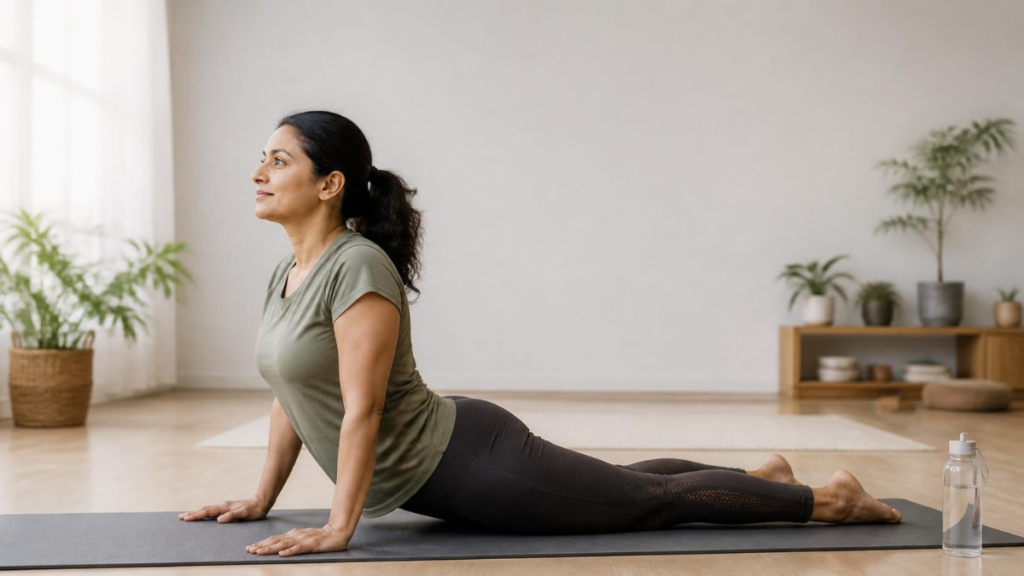
2. Bhujangasana (Cobra Pose)
Bhujangasana gently stretches the abdomen while stimulating abdominal organs, including the pancreas.
Benefits
- Improves pancreatic function
- Enhances digestion
- Strengthens the spine
- Reduces abdominal fat
- Improves posture
Steps
- Lie on your stomach.
- Place your palms beneath your shoulders.
- Inhale and lift your chest.
- Keep your elbows slightly bent.
- Hold for 20–30 seconds.
- Exhale and slowly return.
Repeat 3–5 times.
3. Dhanurasana (Bow Pose)
Bow Pose provides an intense stretch for the entire front body and massages abdominal organs.
Benefits
- Stimulates the pancreas
- Improves digestion
- Helps reduce belly fat
- Boosts metabolism
- Strengthens the back
Steps
- Lie face down.
- Bend both knees.
- Hold your ankles.
- Inhale and lift your chest and thighs.
- Pull your legs upward.
- Hold for 20 seconds.
- Release slowly.
Practice 2–3 rounds.
Avoid this pose if you have severe back pain, hernia, uncontrolled high blood pressure, or have recently undergone abdominal surgery.
4. Ardha Matsyendrasana (Half Spinal Twist)
Twisting poses gently compress and release abdominal organs, improving circulation to the digestive system.
Benefits
- Stimulates the pancreas and liver
- Improves digestion
- Enhances spinal flexibility
- Reduces stress
- Improves metabolism
Steps
- Sit with both legs extended.
- Bend your right knee over your left leg.
- Twist your torso to the right.
- Place your left elbow outside the right knee.
- Hold for 20–30 seconds.
- Repeat on the opposite side.
Perform 2 rounds on each side.
5. Paschimottanasana (Seated Forward Bend)
This calming forward bend relaxes the nervous system while gently massaging abdominal organs.
Benefits
- Reduces stress
- Improves digestion
- Supports pancreatic health
- Helps manage body weight
- Enhances flexibility
Steps
- Sit with legs extended.
- Inhale and lengthen your spine.
- Exhale and bend forward from the hips.
- Reach for your feet or ankles.
- Keep your back as straight as possible.
- Hold for 20–40 seconds.
Repeat 3 times.
6. Vajrasana (Thunderbolt Pose)
Unlike most yoga poses, Vajrasana can be practiced immediately after meals, making it especially useful for people managing diabetes.
Benefits
- Improves digestion
- May reduce post-meal blood sugar spikes
- Enhances blood circulation
- Promotes relaxation
- Easy for beginners
Steps
- Kneel on the floor.
- Sit back on your heels.
- Keep your spine straight.
- Place your hands on your thighs.
- Breathe normally.
- Stay for 5–10 minutes.
This is one of the easiest yoga poses to include in your daily routine.
Best Time to Practice Yoga for Blood Sugar Control
For maximum benefits:
- Practice early in the morning on an empty stomach.
- Alternatively, practice at least 2–3 hours after a meal.
- Vajrasana is the exception and can be practiced after eating.
- Aim for 20–40 minutes daily.
- Combine yoga with deep breathing or meditation.
Consistency is far more important than intensity.
Additional Lifestyle Tips
Yoga works best when combined with healthy daily habits.
To improve blood sugar naturally:
- Eat a balanced diet rich in vegetables, whole grains, and lean protein.
- Walk for 20–30 minutes every day.
- Get 7–8 hours of quality sleep.
- Stay hydrated.
- Limit sugary drinks and processed foods.
- Manage stress through meditation or breathing exercises.
- Monitor your blood sugar regularly.
- Take medications exactly as prescribed by your healthcare provider.
Safety Tips
Before starting yoga:
- Consult your doctor if you have diabetes complications such as diabetic retinopathy, neuropathy, heart disease, or uncontrolled hypertension.
- Practice under a certified yoga instructor if you’re a beginner.
- Stop immediately if you experience dizziness, chest pain, or severe discomfort.
- Never force your body into a pose.
- Keep a small carbohydrate snack nearby if you’re taking insulin or medications that can cause hypoglycemia, especially when exercising.
Final Thoughts
Yoga is much more than a form of exercise—it’s a holistic practice that supports both physical and mental well-being. While no single yoga pose can cure diabetes, practicing these six asanas regularly may help improve insulin sensitivity, reduce stress, support healthy weight management, and contribute to better blood sugar control.
The key is consistency. Even 20–30 minutes of yoga each day, combined with a nutritious diet, regular physical activity, and proper medical care, can make a meaningful difference over time.
If you’re new to yoga, start slowly, focus on proper form, and build your routine gradually. Your body—and your blood sugar—will thank you.
Frequently Asked Questions (FAQs)
Can yoga reduce blood sugar immediately?
Yoga may cause a temporary reduction in blood sugar after a session by increasing glucose uptake in muscles and reducing stress. Long-term benefits are achieved through consistent practice alongside healthy eating and medical treatment.
Which yoga pose is best for diabetes?
There isn’t a single “best” pose. A combination of Surya Namaskar, Bhujangasana, Dhanurasana, Ardha Matsyendrasana, Paschimottanasana, and Vajrasana provides a balanced routine that supports overall metabolic health.
How often should I practice yoga for diabetes?
Aim for at least 20–40 minutes, 5–6 days per week. Regular practice is more beneficial than occasional long sessions.
Can people with diabetes do yoga every day?
Yes, most people with diabetes can practice yoga daily, provided they choose poses appropriate for their fitness level and medical condition. Always seek medical advice if you have diabetes-related complications.
Medical Disclaimer: This article is for informational purposes only and is not a substitute for professional medical advice. Yoga may support blood sugar management but should not replace prescribed treatment. Consult your healthcare provider before starting any new exercise program, especially if you have diabetes or other medical conditions.


Nibedita Sahoo is a certified yoga instructor and holistic wellness practitioner with over 21 years of experience promoting physical, mental, and spiritual well-being. She holds an M.A. in Yoga from Utkal University of Culture and postgraduate and undergraduate degrees in Sanskrit. As a freelance yoga therapist, she has led private and corporate wellness programs, mentored students, and served as a yoga judge at events across Odisha. She is passionate about helping people achieve healthier, more balanced lives through yoga, meditation, Ayurveda, and mindful living.


Pingback: 15-Minute Yoga Routine for Busy Professionals | Fit Buddy Tips