
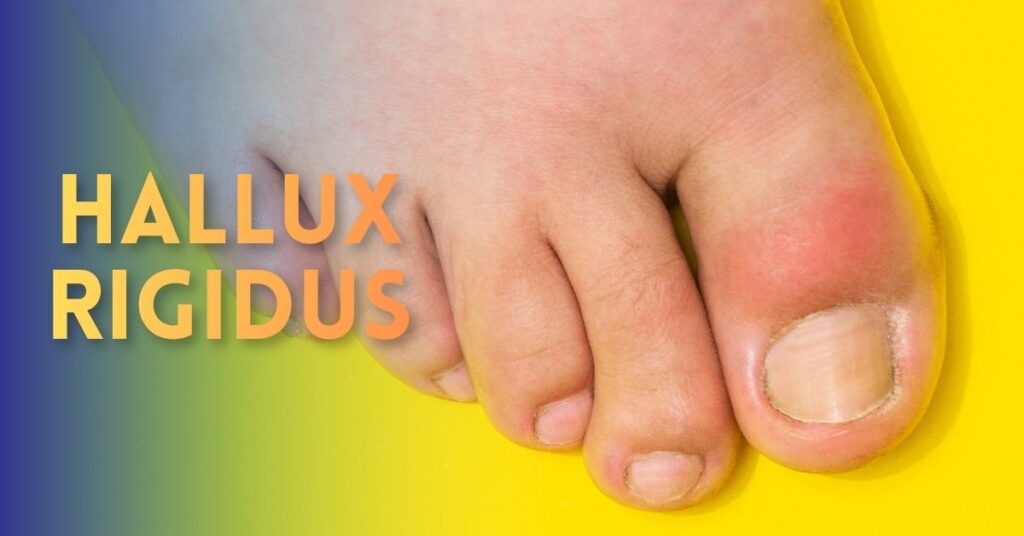
Most people simply ignore their feet until it starts hurting them. If your feet are carrying a pain or stiffness or finding difficulty in moving the big toe, very likely it is “Hallux Rigidus”.
This condition is seen mostly in people aging 30 to 60 years, but it can happen to anyone.
Though the name sounds a very complex one, it happens to be a very common foot problem.
Hallux rigidus develops gradually over a period of time; hence people either ignore or, in some cases, don’t even notice it.
Let’s understand hallux rigidus to spot it at an early stage and prevent excruciating pain, stiffness and mobility issues that adds at the later stages.

What Is Hallux Rigidus?
The term “Hallux Rigidus” is derived from Latin, where “Hallux” is big toe, “rigidus” means stiff or rigid.
Put together, this condition is characterised by stiffness and reduced joint movement combined at the base of big toe.
Hallux rigidus is considered as a form of arthritis that affect metatarsophalangeal (MTP) joint; that connects big toe to the foot.
Over a period of time, cartilage that cushions this area wears away and results in pain, stiffness and reduce movement.
As a matter of fact, Hallux Rigidus is known “big toe arthritis” as its nature is very similar to the arthritis that happen in other body parts.
Causes of Hallux Rigidus
In most patients only one cause isn’t responsible for Hallux Rigidus. Generally, it is combination of factors that causes this condition.
Here are some of the common causes:
Wear and Tear over a period of time
As we age, natural wear and tear of joints is a gradual regression. Over a long period, stress on the big toe damage the cartilage cushion resulting in Hallux rigidus.
Previous Foot Injuries
Injuries like a toe fracture, sprain or other types of injuries to the big toe can cause big toe arthritis or Hallux rigidus at the later stages of life.
Abnormal Foot Structure
Certain foot type, particularly the structure of foot, i.e, how spread of your toes is, may put added pressure of your cartilage and result in damaging it over time.
Genetic Factors
Some people may experience Hallux rigidus due to history of arthritis in their family.
Repetitive Stress Activities
Certain activities like dancing, running, some other exercises put a lot of stress on the forefoot. In some occupation also this kind of stress is common.
In all these cases people are highly susceptible to develop Hallux rigidus.
Recent posts:
Who Can Be Affected by Hallux Rigidus?
It can affect people of all ages. However, it is mostly seen in people within the age group of 30-60 years.
Nevertheless, there are certain types of individuals who are more prone to Hallux rigidus;
- Athletes and runners
- People with physically demanding jobs
- Individuals with a history of foot injuries
- People with arthritis
- Those with abnormal foot mechanics
- Individuals with a family history of foot problems
Women are slightly more likely to get affected by Hallux rigidus, though it is seen in both the genders.
Common Symptoms of Hallux Rigidus
The development of symptoms of Hallux Rigidus is gradual. Often it starts with a small discomfort, which eventually grows with time, until it becomes noticeable.
Common symptoms include:
- Pain in the big toe joint
- Stiffness in the big toe
- Difficulty bending the toe upward
- Swelling around the joint
- A noticeable bump on the top of the joint
- Pain during walking, running, or climbing stairs
- Reduced range of motion
- Discomfort when wearing certain shoes
As the condition worsens over time, even activities as simple as walking can cause discomfort.
How Is Hallux Rigidus Diagnosed?
Prolonged big toe pain and stiffness shouldn’t be ignored. Once you experience these symptoms, get a diagnosis done.
Diagnosis of Hallux rigidus is a several step process;
Physical examination
In this step, doctor will assess your foot pain for swelling, stiffness and range of motion to assess the severity of the condition.
Medical History Review
Queries regarding previous foot injuries, family history, any particular spell of big toe discomfort, lifestyle help ascertain the potential risk factors.
X-Rays
X-rays are conducted to confirm the diagnosis. It is helpful in revealing;
- Joint space narrowing
- Bone spurs
- Arthritis-related changes
- Loss of cartilage
Advanced Imaging
In some cases, even advanced imaging like CT or MRI scans are conducted if more detailed information is required.
Stages of Hallux Rigidus
There are stages of hallux rigidus, which develops in phases;
Early Stage
In the early stage, the condition is known as “Hallux Limitus”, where movement is limited; not completely restricted. Pain is mild and occurs while performing the activity.
Moderate Stage
Stiffness gets intensified; and more noticeable in this stage. Bone spurs generally develop in this stage. Performing activities becomes more uncomfortable.
Advanced Stage
In this stage, joints become notably arthritic. Movement is highly restrictive, and pain may occur even when one is resting.
Remedies and Treatment Options
The best thing about Hallux rigidus remedies is it can be managed without surgery, when the diagnosis and treatment begins early.
Wear Proper Footwear
Wide toe box shoes are highly helpful in reducing stress on the big toe. Other designs like stiff-soled or rocker-bottom shoes are also equally helpful in improving toe comfort.
Use Orthotic Devices
Orthotic devices or shoe inserts helps in redistribute pressure and support foot alignment.
Rest and Activity Modification
Try to reduce or modify the activities that aggravates symptoms, this will lead to minimise pain and inflammation.
Ice Therapy
Application of ice therapy for short periods on the affected area reduce pain and discomfort.
Physical Therapy
There are certain exercises which can help in maintaining flexibility, strengthen connected muscles and improve overall function of foot.
Pain Relief Medications
Over-the-counter anti-inflammatory medications brings temporary relief from pain, however, it is not recommended.
Seek doctor’s consultation and prescription for any medications for Hallux rigidus.
Corticosteroid Injections
These doctor prescribed injections are used in some cases to reduce swelling and pain.
When Is Surgery Necessary?
Surgery is recommended and administered when conservative treatments aren’t adequate for pain and discomfort relief.
Here are the common surgical procedures;
Cheilectomy
This procedure is used to remove bone spurs and damaged tissues from the joint. Once operated it helps in improving movement and reducing pain.
Joint Fusion
In certain sever cases, joint is fused to eliminate the pain. Though, movement is reduced a little, many patients experience a good quality of life once the fusion is administered.
Joint Replacement
In very select cases, the damage happened in the joint is replaced by the artificial implants.
The most appropriate procedure is best determined by a foot or ankle specialist based on the severity of the condition.
Can Hallux Rigidus Be Prevented?
While all case can’t be prevented, certain steps may reduce the risk:
- Wear supportive footwear
- Avoid excessive stress on the feet
- Maintain a healthy body weight
- Address foot injuries promptly
- Use proper athletic techniques during sports and exercise
- Seek medical advice if persistent toe pain develops
Early diagnosis and intervention are often the best possible way to slow progression and preserve big toe function.
Conclusion
Hallus rigidus is not a common term, but many people go through this condition even without noticing the symptoms.
However, hallus rigidus impact the movement and quality of life. Many patients suffer a lot by pain, swelling and discomfort, due to lack of adequate knowledge.
Apparently, right preventive measure and early intervention can lead to effective treatment (or, surgical procedure) and pain relief.
If you have survived or still dealing with hallus rigidus, we would like to know about your experiences and treatment measures. Share with us in comments.

A former Army serviceman, I learned the value of discipline, resilience, and perseverance—qualities that continue to guide my life. My fitness journey sparked a passion for strength, mobility, nutrition, and overall wellness. Through my writing, I share practical, evidence-based fitness tips and workout guides to help readers lead healthier lives. Beyond fitness, I enjoy traveling and exploring new places, believing that both fitness and travel inspire confidence, growth, and lifelong adventure.