
Glute bridge is among the uncomplicated core exercises, which is also regarded as a beginner friendly movement.
Combining core bracing with glute bridge makes it more challenging; while building strength, stability and aligning lower back.
Athletes and fitness enthusiasts or someone struggling with lower back discomfort should consider glute bridge with core bracing in their transverse abdominis exercise routine.
What Is a Glute Bridge with Core Bracing?
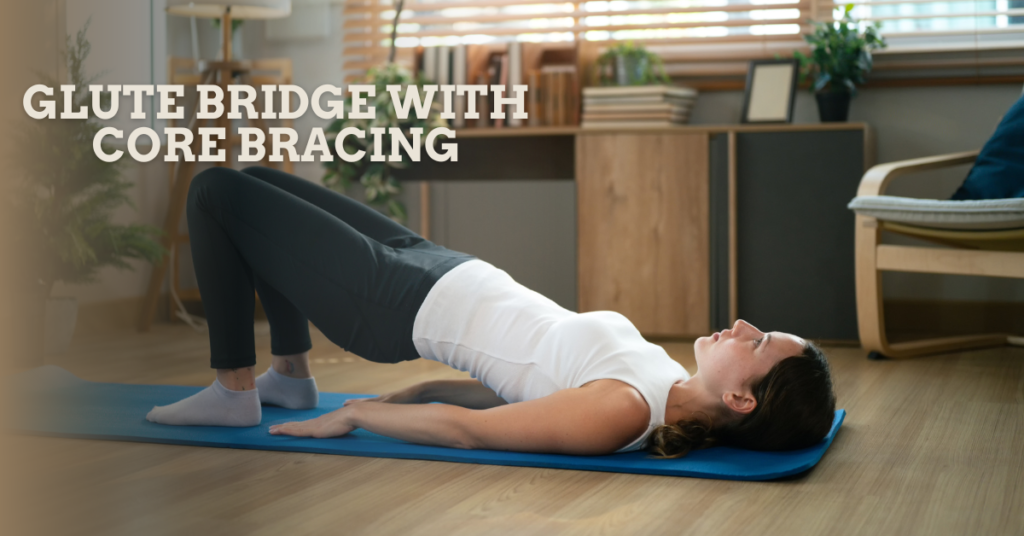
A glute bridge is a movement performed by laying on the back, with knees bent and feet touching the floor flat.
Then you need to lift your hips towards the ceiling by squeezing the glutes.
Core bracing is little step-up one can add to glute bridge exercise for better core activation and lower back comfort.

Why Core Bracing Matters
People usually perform glute bridges by lifting their hips as high as possible, hold position for few seconds and get back down.
While this movement is effective enough for core activation; it can lead to over-arching of the lower back. Core bracing can help prevent this over-arching.
The core bracing before performing the lift movement helps in stabilising the spine and pelvis. This allows glutes to achieve required range of motion of lifting hips.
How to Perform the Exercise
- Lie on your back with your knees bent and feet hip-width apart.
- Place your arms by your sides.
- Take a deep breath and gently brace your core.
- Press through your heels and squeeze your glutes.
- Lift your hips until your body forms a straight line from shoulders to knees.
- Pause for one to two seconds at the top.
- Slowly lower your hips back to the starting position.
- Repeat for 10–15 repetitions.
Try to keep focus on maintaining constant focus throughout the movement rather chasing the maximum lift height.
Benefits of Glute Bridges with Core Bracing
Better Core Activation
Core stability brings about better alignment of glutes, thereby building stronger and powerful hips.
Improved Lower Back Support
In this exercise, you need to have proper pelvic control, and thereby reduce stress away from lumbar spine in day-to-day activities.
Enhanced Athletic Performance
Strong glutes and core ensure better performance in various activities like running, jumping, lifting, or overall movement control.
Better Posture
Many people have a longer sitting hours due to work and other activities. This practice may take its toll on your posture and body. Glute bridges and core bracing can help negate these effects.
Common Mistakes to Avoid
- Overarching the lower back at the top of the movement.
- Pushing through the toes instead of the heels.
- Relaxing the core during the lift.
- Rushing through repetitions without controlling the movement.
Conclusion
Glute bridges with core bracing are very simple yet powerful movement that help in building a stronger posterior chain, and improving core stability.
By focusing on quality movement and proper abdominal engagement, you can maximize the benefits of this exercise and build a stronger foundation for both fitness and everyday life.
Let us know if you also perform glute bridges with core bracing consistency in your exercise routine.

A former Army serviceman, I learned the value of discipline, resilience, and perseverance—qualities that continue to guide my life. My fitness journey sparked a passion for strength, mobility, nutrition, and overall wellness. Through my writing, I share practical, evidence-based fitness tips and workout guides to help readers lead healthier lives. Beyond fitness, I enjoy traveling and exploring new places, believing that both fitness and travel inspire confidence, growth, and lifelong adventure.

Pingback: Best Transverse Abdominis Exercises for Core Strength
Pingback: 40+ and Want to Stay Fit? These Bodyweight Exercises Actually Work
Pingback: What Muscles Does a Plank Work? More Than Just Your Abs
Pingback: Why the Bird Dog Exercise Feels Harder Than It Looks
Pingback: 7-Day Beginner Yoga Plan for Strength and Flexibility