

The title is a million-dollar question in itself, but am I the right person to even answer this?
No, I myself would probably say I am not the right person or a professional to answer this.
But then you might ask why I am trying. Basically, I am not answering this question.
As I have been practising this diet for over 5–6 months now, I can share my experience with everyone.
Why did I start the DIP diet?
To start with, it is better to know my health condition.
I am diabetic (diagnosed in 2018), have pancreatitis (diagnosed in 2022), and have high cholesterol—marginally, but it has been consistent over the years.
Alongside, I have had constipation ever since I can remember.
I do exercise every evening, 3–5 km of a mix of walking and running.
Once I came across a reel on Facebook, and for some reason, the presenter sounded very convincing. The next day, I started.
But before going into my personal experience, there are a few things that you might want to know about this diet.
So, what is the DIP Diet?
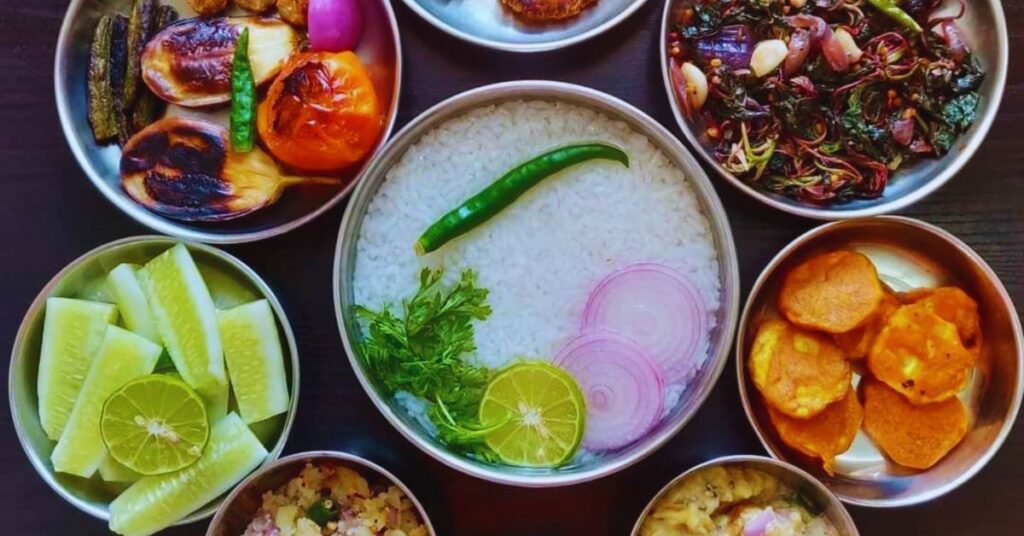
DIP, or as it is called, Disciplined and Intelligent People diet, is a special diet focusing mainly on the raw consumption of food, in addition to what you normally eat.
The entire principle, as is believed, is to monitor the micro-nutrients of your food intake so that the body doesn’t manufacture excess blood sugar. So, there is a formula, like below:
I am applying this formula to my body weight, that is 65 kg at the age of 42.
| Concept of DIP Diet | ||
| Breakfast | 2–4 types of fruits × 10 grams of your body weight | 65 × 10 = 650 grams |
| Lunch | Salad × 5 grams of your body weight Normally what you eat for lunch | 65 × 5 = 325 grams |
| Dinner | Salad × 5 grams of your body weight Usually what you eat for dinner | 65 × 5 = 325 grams |
Basically, this is how you have to remodel your major diets of the day.
From a point-blank view, there are a few good and bad aspects to point out straight away.
The DIP diet allows a practitioner to enjoy flexibility in the choice of fruits or vegetables they are consuming.
No restrictions on more sweet fruits like mangoes, banana, strawberries, etc.
While, on the other hand, it doesn’t discuss the in-between small portions food/meal that many of us consume.
Few more conditions or situations for DIP diet
You are flexible to eat your breakfast at one go, or in small batches. Aim is to finish the breakfast of fruits before 12PM.
Try to finish your dinner around 7PM, or last by 8PM. Have your breakfast not before 9 AM. I have maintained this positively.
If you deviate from your disciplined diet for some reason, try to get back to it, as soon as possible.
If you have medical conditions like me, do consult your doctor about your willingness to adopt this diet.
What have I done with the DIP Diet?
I have been following this diet for over 6 months now.
I would put an honest confession here: I haven’t been the strictest follower of the diet. But I have managed to eat this particular breakfast religiously.
In salads, sometimes I haven’t been consistent, as I eat fewer grams on some days. But overall, I have been regular, barring a few weekend meals.
Alongside the DIP diet, I have modified my non-vegetarian and dairy eating preferences. I have quit dairy products completely, with one exception—that is curd.
In non-vegetarian food, I stick to fish only. And that is the basic change I have made in my eating habits.
I was using coconut oil earlier for cooking. But for the last 3–4 months, I have been using cold-pressed groundnut oil. And my oil consumption is very low.
My experiences with the DIP Diet
There are a few benefits that I have experienced with the DIP diet, and let me first put them in front of you.
Blood sugar: My blood sugar has come down significantly. It used to be in the 170–180 range (rare instances of 200+ as well). I used to take 15–18 units of insulin daily before food.
Now my blood sugar reading remains around 120–130. Sometimes I have found it over 150, whenever I had something sweet the previous evening, like a piece of cake. In first few weeks, I started taking 50% less insulin, and now my blood sugar level is in healthy range with 6 units of insulin each day.
Constipation: I have improved a lot. I wouldn’t say it has completely reversed, but I now have regular bowel movements every day and with a lot of ease.
Let me be honest about it—this had been troubling me psychologically as well.
Cholesterol: My results two months back were encouraging, as I was marginally over in LDL and total cholesterol counts.
Everything else has fallen into place compared to my reports from 4 months earlier.
Pancreatitis: It has been feeling normal at the moment, as I haven’t experienced any pain after September 2023. So, any benefits from the DIP diet can’t be associated in this case.
Overall verdict
Again, I am not a medical professional. As I said earlier, I am a practitioner of this diet, hence I have shared my experiences with you. If you are looking forward to any such diet, I am providing a few research papers that I found online regarding this diet. The reason behind doing this is to provide everyone with more scientific work done on this diet.
Besides, let me also put forward some scrutiny of this research work.
Let me declare here that these research papers are criticised for their small sample size. The second one is done on a single person.
Another key factor to notice here is all the above research papers are written by a single doctor—precisely the person whose reel I saw and started following this diet.
But I would also remain transparent and say the benefits mentioned are my personal experience.
My final verdict would be: while DIP Diet is good for maintaining blood sugar and can help with cholesterol when you eat clean, the claims of complete reversal of diabetes are debatable.

A former Army serviceman, I learned the value of discipline, resilience, and perseverance—qualities that continue to guide my life. My fitness journey sparked a passion for strength, mobility, nutrition, and overall wellness. Through my writing, I share practical, evidence-based fitness tips and workout guides to help readers lead healthier lives. Beyond fitness, I enjoy traveling and exploring new places, believing that both fitness and travel inspire confidence, growth, and lifelong adventure.
Pingback: Pakhala Bhata – The Natural Probiotic of Odisha - Fit Buddy Tips
Pingback: Why I Stopped Fasting after Trying for One Month! -
Pingback: Reheated Rice Hack: Does It Reduce Blood Sugar Spikes?
Pingback: Why Everyone Is Obsessed With Fibermaxxing Right Now